First, frame one falsifiable claim.
Each build begins with a measurable latency, cost, or accuracy threshold rather than an open-ended chat interface. If a plain deterministic script solves the task faster, the model call is cut.
Microsoft Foundry field station in East US 2, isolated from veevia.com.
An applied AI lab by Wei Wei where model routing, ontology grounding, and tool-use failure modes are measured against live Azure telemetry.
Case studies on veevia.com document finished enterprise systems. Experimental model work needs a different room where latency spikes, brittle prompts, and schema drift stay visible.
Every prototype here runs on serverless Azure Container Apps and keyless Microsoft Foundry endpoints in East US 2. Nothing touches the Netlify static build or consumes portfolio bandwidth, and idle containers scale down to zero between runs.
Instead of polished chat wrappers, each study isolates one architectural question: when a smaller reasoning model beats a frontier call, how graph ontologies constrain hallucinated joins, and what breaks first under adversarial tool payloads.

Four focused harnesses scheduled on Foundry project veevia-lab. Select any row on the board to inspect its evaluation rubric or run an invite-gated probe.
Every experiment moves through four gates before its notes are published alongside the interactive harness.
Each build begins with a measurable latency, cost, or accuracy threshold rather than an open-ended chat interface. If a plain deterministic script solves the task faster, the model call is cut.
Container Apps authenticate to Microsoft Foundry through a user-assigned Managed Identity with local API keys disabled by policy. Every tool schema is typed and bounded to read-only fixtures.
Twenty-five adversarial and boundary cases run against the candidate deployment, recording p50 and p95 latency, token draw, and exact failure spans in Log Analytics.
Working harnesses stay open with an invite key for live runs while cached evaluation traces remain readable by anyone visiting from veevia.com without waking the model tier.
Archival computing rooms paired with the four research tracks opening first inside Veevia Lab. Select a track to preview its scope and instrumentation.
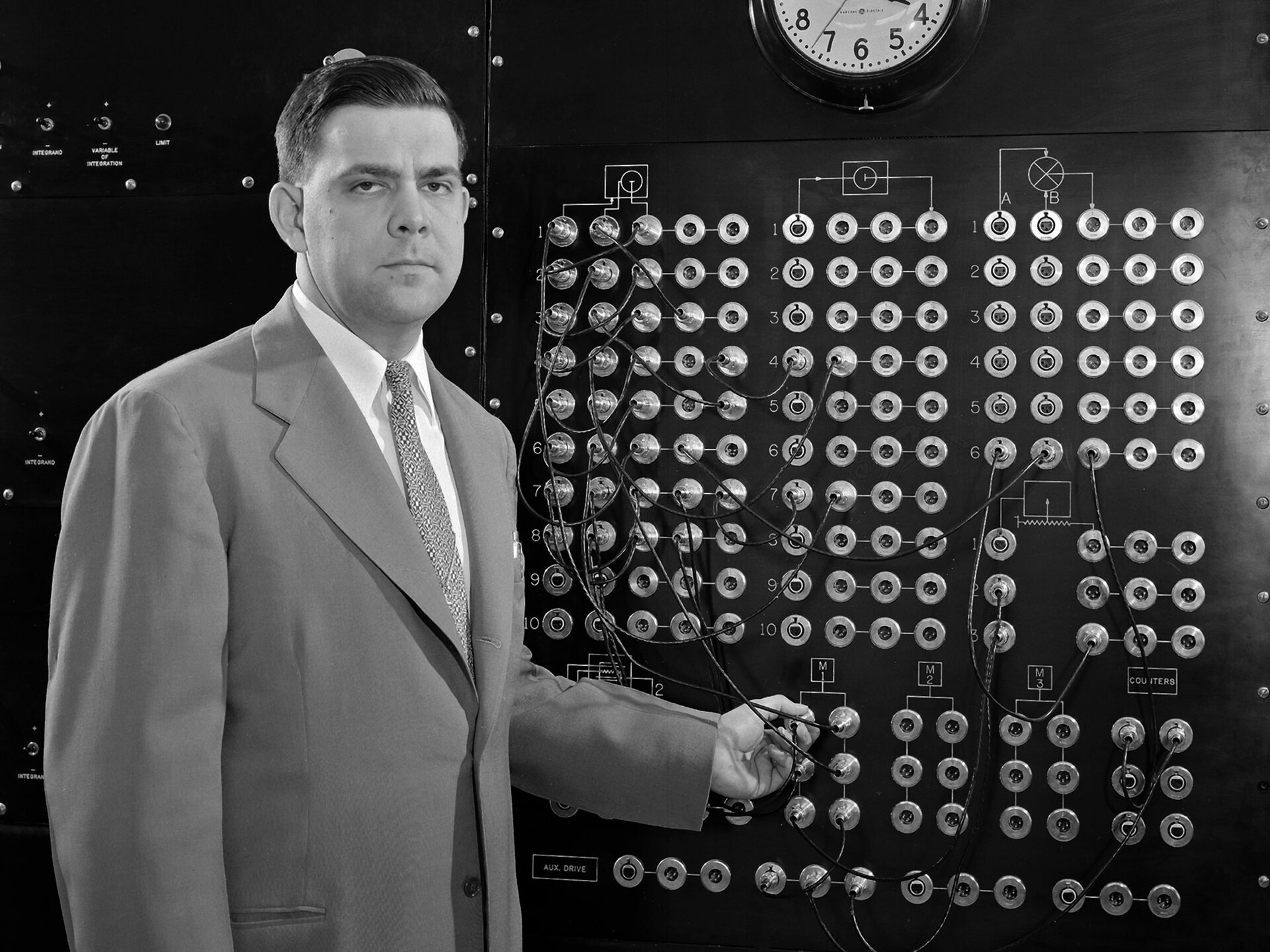
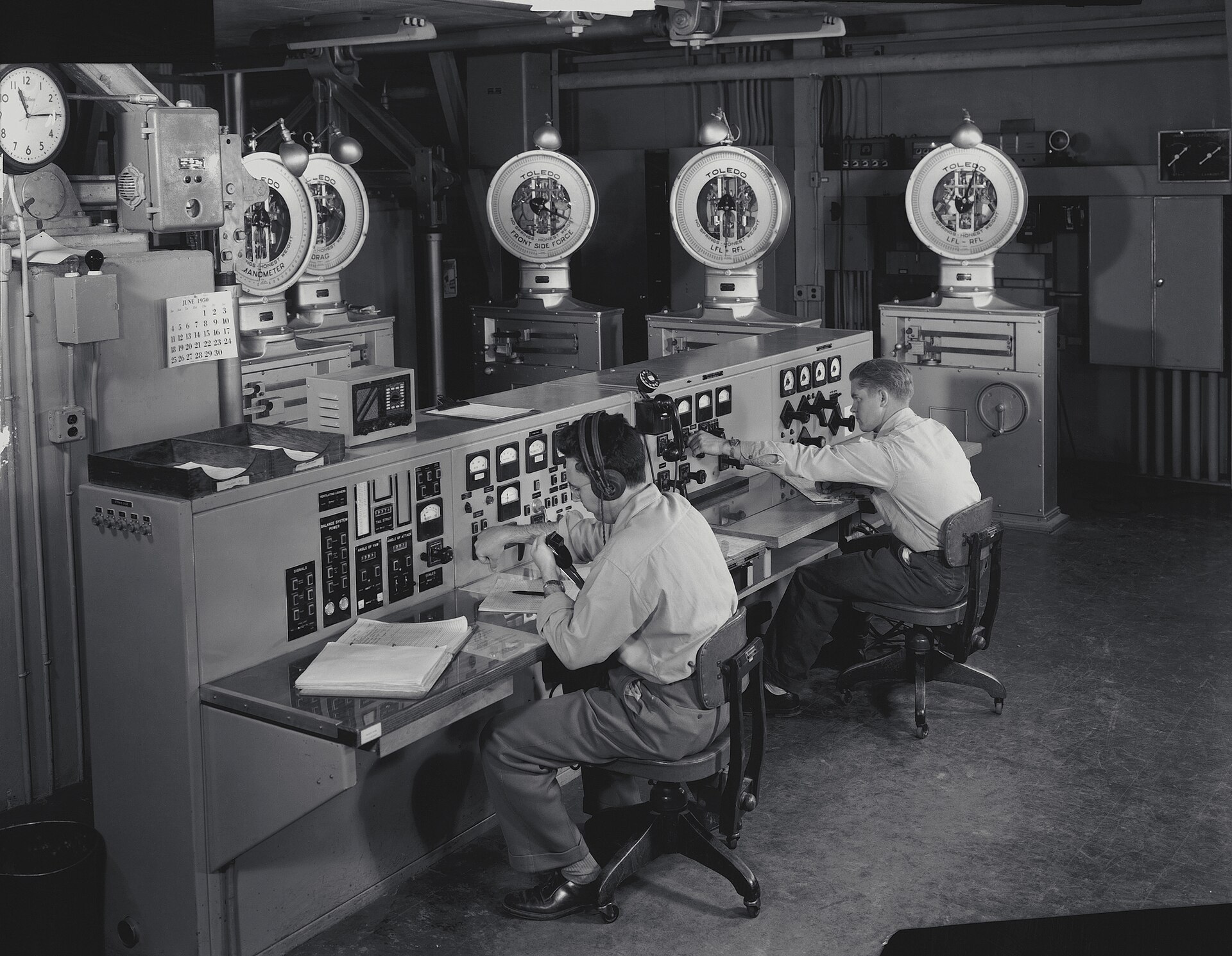
NACA Ames 40-by-80-Foot Wind Tunnel Balance House, 1950. Centralized force balances isolate one variable per test run.
Subdomain delegation keeps editorial publishing and live model compute cleanly separated under one domain name.
Visitors reading veevia.com stay on Netlify's global static edge. Requests to lab.veevia.com resolve directly by CNAME to Azure Container Apps in East US 2, where TLS terminates with an Azure-managed certificate and zero traffic crosses Netlify.
Inside Azure, the Node 22 runtime holds zero API keys on disk or in environment variables. Every inference call acquires a short-lived Entra token through user-assigned Managed Identity id-veevia-lab, governed by a hard monthly budget alert and instant scale-to-zero when idle.
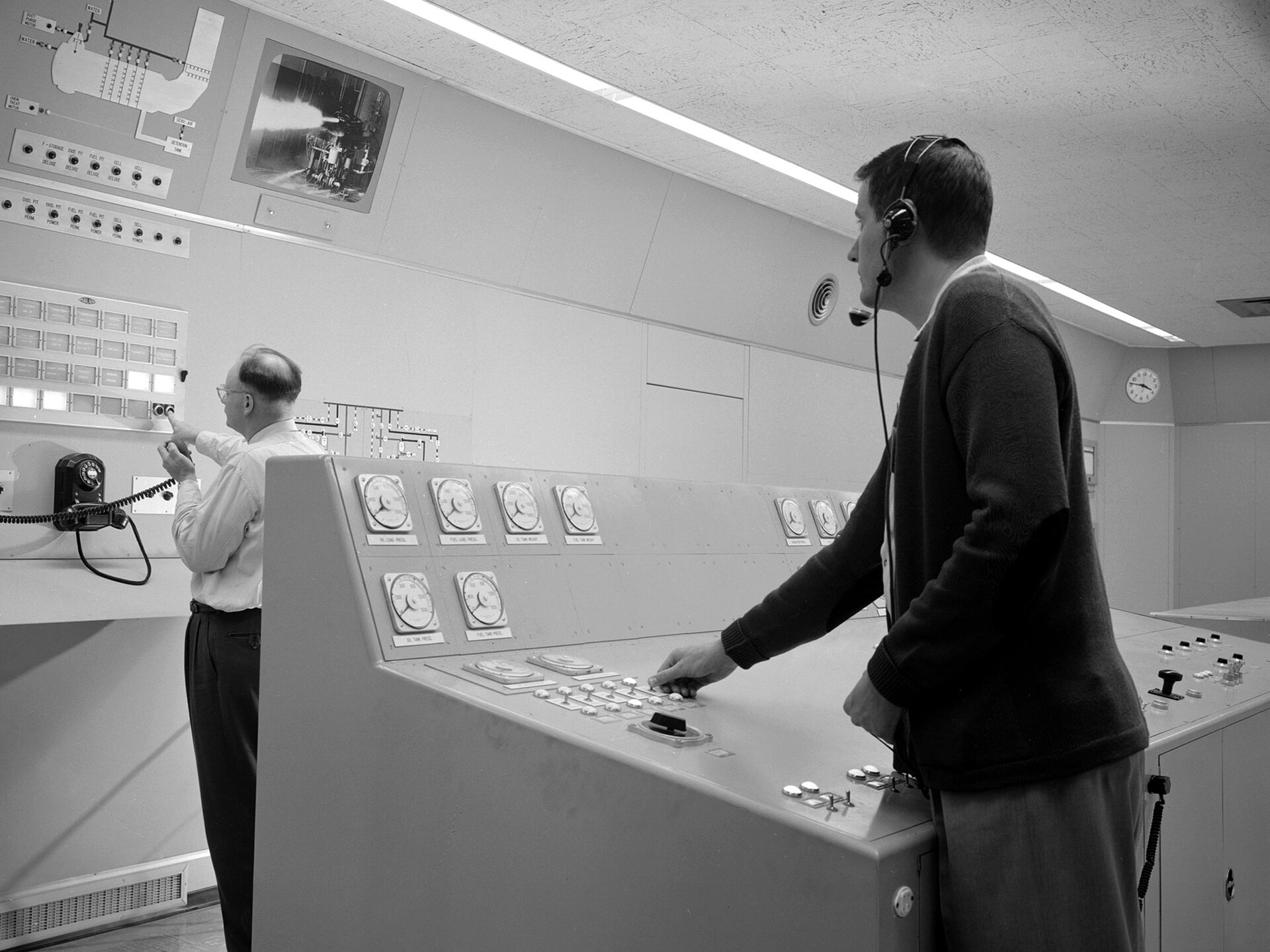
Completed case studies, essays, and portfolio history remain on the main site while live harnesses graduate into this workbench.